
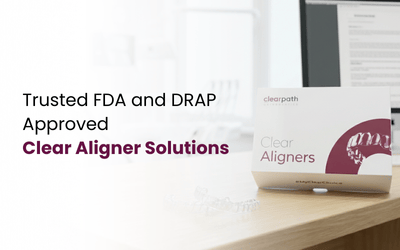
Trusted FDA and DRAP Approved
Clear Aligner Solutions
Podcast on this blog is available now! →
Why FDA and DRAP Approvals Matter for Clear Aligners
Clear aligners have become a mainstream orthodontic option for many patients. As demand surges, ensuring the devices meet strict safety and performance standards is crucial. FDA (USA) and DRAP (Pakistan) approvals signal that an aligner system has passed rigorous testing for material safety and clinical effectiveness.
Growing demand for clear aligners: Patients of all ages increasingly prefer discreet, removable aligners over traditional braces.
Importance of oversight: Regulatory bodies like the FDA regulate aligners as medical devices (Class II NXC) requiring 510(k) clearance.
Trust and safety: Clearance assures both patients and dentists that the product uses biocompatible materials and validated designs.
Read More: Why Dentists Are Switching to Clear Aligners
What Are FDA and DRAP Approvals?
In fact, the first popular clear aligner (Invisalign) was FDA-cleared in 2000, helping launch the modern aligner industry. Since then, FDA/DRAP clearance has become the standard for any aligner therapy. Both FDA and DRAP treat aligners like other medical devices. FDA classifies them (Product Code NXC) as Class II devices requiring 510(k) review, which means the materials and performance must be tested and documented. DRAP similarly requires manufacturers to register their products and demonstrate compliance with safety requirements before approval. For example, DRAP’s 2025 online portal demands ISO 13485 quality certificates, biocompatibility test results, and other safety data. Once these are reviewed, a product gets a DRAP license to sell locally. For patients, a DRAP-licensed aligner has passed rigorous local testing and approvals, giving confidence it meets both international and Pakistani safety standards.
What Is FDA Approval for Clear Aligners
Under FDA rules, aligner systems must be cleared before marketing. This means the manufacturer has demonstrated compliance with standards (e.g. ISO 20795-2 for orthodontic polymers). FDA 510(k) clearance indicates the aligners have been tested for safety and effectiveness in moving teeth as intended. In short, FDA approval means the aligner’s material is proven biocompatible and the device is validated to produce predictable orthodontic results.
Medical device classification: Clear aligners fall under FDA Product Code NXC (Class II), so they must clear a 510(k) review.
Quality and safety benchmarks: The FDA requires evidence that aligner materials are non-toxic and that the treatment plan leads to the intended result.
What Is DRAP Approval in Pakistan
DRAP, Pakistan’s Drug Regulatory Authority, now oversees medical devices including aligners. The agency launched an online portal in 2025 to register devices. To gain DRAP approval, companies must submit detailed documentation – for example, quality management certificates (ISO 13485), material safety tests, and clinical or lab data. Only after this review is an aligner licensed for sale in Pakistan. For patients, a DRAP-licensed aligner has passed rigorous local testing and approvals, giving confidence it meets both international and Pakistani safety standards.
Role of DRAP: DRAP regulates and licenses orthodontic devices for Pakistan, acting like the FDA locally.
Importance for local patients: A DRAP-approved aligner assures Pakistani users that the device meets national safety and quality standards.
Why FDA and DRAP Approvals Matter for Clear Aligners
These approvals have real benefits:
Patient safety: Certified aligners are made with biocompatible, medical-grade materials that undergo toxicity testing. This greatly reduces the risk of mouth irritation or allergic reactions.
Predictable outcomes: FDA/DRAP clearance means the aligners’ performance is documented. Clinicians can rely on data or validated simulations to deliver consistent results.
Professional compliance: Using approved devices helps dentists meet legal and ethical standards of care. It also builds patient trust, since the product is officially vetted.
In practice, FDA/DRAP-certified aligners act as a quality seal. They ensure each aligner tray is safe for long-term wear and that the treatment plan works as intended.
How Approved Clear Aligners Protect Patients
For patients, certified aligners mean safer materials and proven designs. FDA/DRAP approval tests cover every aspect from plastic chemistry to engineered tooth movement.
Regulatory approval ensures every aligner meets high safety criteria. Approved aligners are manufactured from inert, medical-grade plastics that comply with dental device standards. Manufacturers must demonstrate that these plastics release no harmful substances. Studies confirm that certified aligner materials release virtually no toxins (such as BPA) and maintain high cell viability. In short, cleared aligners do not introduce toxic monomers or allergens into the mouth.
Medical grade materials: Certified aligners use polymers meeting FDA-recognized standards (e.g. ISO 20795-2).
Non-toxic: Tests for certified aligners repeatedly show a favorable biocompatibility profile with minimal chemical leaching.
Clinical Effectiveness and Accuracy
Regulators also verify the aligners’ performance. Many approved systems use precise digital planning (for example, ClearPath’s CP Smart™ platform) to simulate treatment. This ensures each aligner moves teeth as intended. In clinical terms, when clear aligners are used under proper guidance, they deliver orthodontic outcomes comparable to traditional braces. FDA/DRAP approval thus helps ensure treatment accuracy and consistent results.
Digital planning: Manufacturers must show that their treatment plan is valid. Advanced 3D software is used to simulate tooth movements and fine-tune aligners beforehand.
Predictable results: Cleared aligners have documented success. Studies confirm they safely achieve intended movements, giving patients confidence in the final outcome.
For dentists, using certified aligners is aligned with evidence-based practice and reduces liability.
Orthodontists know that using FDA-cleared aligners reduces the chance of unexpected complications. These aligners, built on proven technology, often offer greater comfort (less pain) than braces. Clinicians value the strong safety profile that comes with certification.
Evidence-based: FDA/DRAP approval requires supporting data, so clinicians can follow tested protocols rather than guessing.
Reduced risks: Certified aligners minimize chances of defects or material problems.
Professional accountability: Offering only approved aligners ensures dentists follow regulations and strengthens patient trust.
As one orthodontic expert states, “I recommend FDA and DRAP approved clear aligners… because they meet the highest global safety standards”.
FDA/DRAP Approved Aligners vs Non-Approved Aligners
Choosing FDA/DRAP-cleared aligners greatly improves treatment quality:
Quality differences: Unapproved aligners may use unverified plastics or cut corners. In contrast, certified aligners must meet strict device standards for materials and production.
Safety vs risk: Without review, unsupervised aligners can misfit or cause unexpected movement. Certified devices, having passed checks, minimize such issues. One study found aligner patients report less discomfort than with braces, reflecting the benefits of controlled aligner use.
Oral health: Approved aligners apply carefully controlled forces and allow removal for cleaning. This helps prevent enamel damage or gum issues. Overall, certified aligners protect long-term dental health by maintaining optimal force application and hygiene.
Read More: How to Manage Clear Aligners While Fasting
Affordable Clear Aligners Without Compromising Safety
Regulatory approval does not inherently mean higher cost:
Cost vs compliance: FDA/DRAP-certified aligners can be produced at scale, spreading out costs. Many clinics offer these systems through existing lab networks, keeping prices competitive.
Approval ≠ expensive: Market competition among certified brands keeps prices fair. For example, ClearPath provides FDA/DRAP-approved aligners through local dentists, helping control costs. Patients can often find these aligners at prices similar to other orthodontic options.
Value-based care: Any small premium for certification is offset by reliability. Spending a bit more for a verified aligner typically avoids expensive fixes later.
In short, patients can obtain affordable FDA/DRAP-certified aligners without sacrificing quality or safety.
Both clear aligners and braces are medical devices subject to FDA/DRAP standards. Certified aligners are shown to cause less soft-tissue irritation, partly because patients can remove them for cleaning. Studies find aligner patients report significantly less pain than braces patients. With FDA-cleared aligners, parents and adults can trust the safety profile is on par with traditional braces.
Removability benefit: Because aligners are removable, patients maintain better oral hygiene, reducing the risk of cavities and decalcification.
Comparable safety: Both treatment systems apply controlled forces to move teeth. FDA-cleared aligners and braces share similar safety requirements, but aligners use precise digital planning and softer materials for patient comfort.
Are FDA and DRAP Approved Aligners the Best Aligners in the World?
FDA/DRAP approvals often mark top-tier aligner systems:
Global Standards and International Trust
Certified aligners usually meet multiple international standards. These products often carry certifications like CE (Europe) or TGA (Australia), indicating broad acceptance.
Recognition: Brands with these approvals are used in markets worldwide. ClearPath aligners, for example, are sold in over 26 countries, showing global trust.
Clinical credibility: These aligners have strong research support. A recent review described clear aligner therapy (when overseen by orthodontists) as a “safe, effective” treatment. That level of validation is more common among FDA/DRAP-approved systems, making them some of the most trusted aligners globally.
ClearPath Ortho Commitment to Safety and Compliance
ClearPath Ortho exemplifies these standards. As Pakistan’s first clear-aligner company with both US FDA and DRAP clearances, it prioritizes compliance at every step:
Regulatory adherence: ClearPath aligners hold FDA 510(k) clearance and DRAP licensing, confirming their high-quality manufacture.
Doctor-led: Licensed orthodontists oversee each case plan using advanced tools (like the CP Smart™ platform), ensuring the therapy is clinically sound.
Patient-first: Every aligner set is custom-made for comfort and safety. ClearPath uses precise digital scans and medical-grade materials, focusing on hygiene and patient care.
By aligning innovation with strict compliance, ClearPath demonstrates why professional and patient trust goes hand-in-hand with FDA and DRAP approvals.
Conclusion
In summary, FDA and DRAP approvals guarantee that clear aligners meet essential safety and effectiveness standards. For orthodontic treatment, these approvals should be a key criterion in choosing an aligner system. Products with clearance – like those from ClearPath Ortho – offer verified quality: from biocompatible materials to clinically proven performance. For patients (especially in Pakistan), checking for FDA/DRAP approval is a quick way to ensure a safe, high-quality treatment. For anyone considering aligner therapy, the message is clear: always choose a system with FDA and DRAP certification. In practice, regulatory clearance is the hallmark of world-class aligner therapy. Always ask if the aligner system is FDA/DRAP-approved, these certifications mean the product has undergone rigorous safety and performance evaluations. In the market, verifying approvals is standard practice.