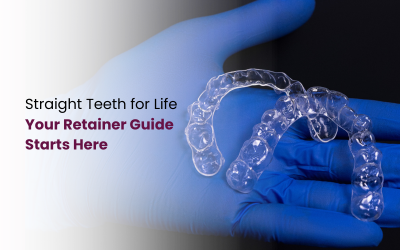
Straight Teeth for Life
Your Retainer Guide Starts Here
Podcast on this blog is available now! →
Do You Need a Retainer After Clear Aligner Treatment?
A retainer after aligners is not optional. Once clear aligner treatment ends, teeth will shift back toward their original positions without something holding them in place. This guide covers what a retainer is, why you need one, which types are available in Pakistan, how long to wear it, and how ClearPath Aligners manages retention for every patient.
Read More: Why Dentists Are Switching to Clear Aligners
What is a Dental Retainer?
A dental retainer is a custom-made oral appliance worn after orthodontic treatment to hold teeth in their new positions. Once braces or clear aligners have moved your teeth, the surrounding bone and soft tissue need time to stabilize around the new alignment. A retainer prevents teeth from drifting back toward their original positions during that stabilization window. Retainers are:
- Custom-fitted to your specific post-treatment dental arch
- Removable or fixed, depending on the type prescribed
- Passive appliances they hold, not move, teeth
The retainer is the final phase of orthodontic treatment, not an add-on.
Why a Retainer is Necessary After Aligners
The Science Behind Tooth Relapse
When aligners move your teeth, the periodontal ligaments — the fibrous tissue connecting teeth to the jawbone — stretch and compress. After treatment ends, those ligaments have a biological memory. Without something holding the teeth in place, they will attempt to return toward their pre-treatment positions. This is called orthodontic relapse. Studies published in orthodontic literature consistently show that without retention, significant relapse occurs within the first 12 months after treatment. In some cases, full relapse happens within two to three years.
Clear Aligners and Retention
Clear aligners treatment, including ClearPath aligners, moves teeth using a series of precisely calibrated trays. The final tray brings teeth to the target position but does not stabilize the bone around it. That biological stabilization takes months to years, which is exactly the window your retainer covers.
Key Reasons You Need a Retainer After Aligners
- Bone remodeling is slow. Teeth settle into new bone positions over 12 to 24 months after treatment.
- Natural forces are constant. Chewing, swallowing, tongue pressure, and lip pressure all push against teeth every day.
- Teeth have positional memory. The periodontal ligament actively pulls teeth back if left unsupported.
- Alignment is an investment. Protecting months of treatment with a retainer is far less costly than retreatment.
Skipping the retainer is the most common reason patients need to repeat aligner treatment.
Types of Retainers Available in Pakistan
Pakistani orthodontic clinics and ClearPath-affiliated providers offer three main retainer types. Each has specific advantages depending on the patient’s case, lifestyle, and budget.
1. Essix Retainer (Clear Plastic Retainer)
The Essix retainer is a thin, transparent tray that fits snugly over the teeth — very similar in appearance to a clear aligner tray. It is the most commonly prescribed retainer after clear aligner treatment because the patient is already accustomed to wearing a similar appliance.
Advantages:
- Nearly invisible when worn
- Comfortable and smooth against soft tissue
- Easy to remove for eating and cleaning
- Affordable entry price in Pakistan
Considerations:
- Can wear out over 1 to 2 years with heavy use
- Not suitable while eating or drinking anything except water
- Requires daily cleaning to prevent staining and odor
Best for: Patients coming off ClearPath or other clear aligner systems who want a seamless transition.
2. Hawley Retainer (Wire Retainer)
The Hawley retainer is made from an acrylic base molded to fit the palate (or lower arch) with a metal wire that runs across the front teeth. It is the traditional orthodontic retainer that has been in use for decades.
Advantages:
- Very durable — can last 5 to 10 years with proper care
- Adjustable by the orthodontist if minor corrections are needed
- Allows natural tooth contact when biting
- Available in colored acrylic options for younger patients
Considerations:
- Visible metal wire on the front teeth
- Slightly bulkier than an Essix tray
- Can affect speech slightly during the initial adjustment period
Best for: Patients who need a long-lasting, cost-effective solution and are not concerned about appliance visibility.
3. Fixed (Bonded / Permanent) Retainer
A fixed retainer is a thin wire bonded directly to the back (lingual) surface of the front teeth — typically the lower front six teeth. It is invisible from the outside and requires no patient compliance because it cannot be removed.
Advantages:
- Works 24/7 without any effort from the patient
- Completely invisible from the front
- Ideal for patients with high relapse risk or compliance challenges
- Provides long-term, passive retention
Considerations:
- Requires extra care when flossing — a floss threader or water flosser is needed
- Can occasionally debond and requires a clinic visit to repair
- Not suitable for patients with certain bite configurations
Best for: Lower front teeth where relapse risk is highest, or patients who know they will not consistently wear a removable retainer.
Comparing Retainer Types at a Glance
| Feature | Essix | Hawley | Fixed/Bonded |
|---|---|---|---|
| Visibility | Minimal | Moderate (wire) | None |
| Removable | Yes | Yes | No |
| Durability | 1 to 2 years | 5 to 10 years | 5 to 10+ years |
| Compliance Required | High | High | None |
| Cleaning Ease | Easy | Easy | Moderate |
| Cost in Pakistan | Low to Medium | Low to Medium | Medium to High |
How Long to Wear a Retainer After Treatment
The wearing schedule for a retainer after aligners follows a standard protocol, though your orthodontist may adjust it based on the complexity of your case.
- Initial Phase Full-time wear for the first 3–6 months, typically 20–22 hours per day, to keep teeth stable during the most important settling period.
- Transition Phase Gradually reduce wear to nighttime only for the next 6–12 months, allowing the teeth and supporting bone to fully adapt.
- Long-Term Maintenance Continue wearing retainers a few nights per week indefinitely, since natural aging and normal bite forces can still cause teeth to shift over time.
A simple rule to remember: Wear your retainer for as long as you want to keep your teeth straight.
ClearPath Orthodontics follows a structured retainer protocol designed to protect every patient’s investment after completing clear aligner treatment.
What ClearPath Recommends
At treatment completion:
- A final set of records (photos, scans, or impressions) is taken
- A custom-fitted retainer is fabricated based on the final tooth position
- The patient receives written instructions and a wearing schedule
Retainer type selection: ClearPath providers assess each patient individually. The choice between an Essix, Hawley, or fixed retainer is based on:
- The degree of tooth movement performed
- The patient’s oral hygiene habits
- Compliance history during aligner treatment
- Whether high-risk teeth (lower front, previously rotated teeth) require fixed retention
Follow-up care:
- ClearPath certified dentists are trained to check their patients at 1 month, 3 months, and 6 months post‑treatment for retention checks.
- Retainer fit is evaluated and adjusted as needed
- Replacement retainers are available at affiliated clinics across Pakistan
Why ClearPath’s Approach Works
ClearPath Aligners are manufactured to precise specifications, which means the final tooth positions are digitally documented. This documentation allows ClearPath-affiliated providers to fabricate replacement retainers from the original records, even years later — a significant benefit over providers who do not archive digital treatment data. Patients who follow the ClearPath retainer protocol consistently maintain their results long-term. Those who skip or discontinue retention are the ones most likely to require retreatment.
End Note
A retainer after aligners is not an optional step. It is the structure that keeps your results intact for life. Without it, the bone and tissue surrounding your teeth will gradually shift them back toward their original positions. The key points from this guide:
- Biological relapse is real and begins quickly after treatment ends
- Wear full-time for 6 months, then nightly indefinitely
- ClearPath’s retainer protocol is structured, documented, and designed for long-term success
If you have completed or are planning ClearPath Aligner treatment and want to understand your retention options, consult a ClearPath Certified Dentist for a personalized retention plan.
Read More: How to Manage Clear Aligners While Fasting