
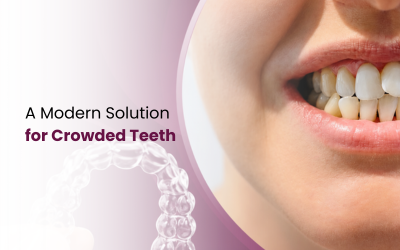
A Modern Solution
for Crowded Teeth
Can Clear Aligners Fix Crowded Teeth?
Yes, clear aligners can fix crowded teeth in many suitable cases, especially mild to moderate crowding. These transparent, removable trays gradually move overlapping, rotated, or misaligned teeth into better positions without traditional metal brackets and wires. Depending on the amount of crowding, your dentist or orthodontist may also use techniques such as interproximal reduction (IPR), attachments, controlled expansion, or other planned tooth movements to create the space your teeth need. However, every smile is different. The right crowded teeth treatment depends on your bite, available space, tooth position, gum and bone health, and the complexity of the movements required.
What Are Crowded Teeth?
Crowded teeth occur when there is not enough space in the dental arch for all your teeth to sit in their ideal positions.
When space is limited, teeth may overlap, rotate, tilt, or move in front of or behind neighbouring teeth. Crowding can affect the upper teeth, lower teeth, or both.
For some people, the problem may be limited to one slightly rotated tooth. For others, several teeth may overlap or sit outside the normal dental arch.
Common signs include:
Overlapping front teeth
Rotated or twisted teeth
Teeth sitting behind one another
Difficulty flossing between certain teeth
Teeth erupting outside their ideal position
An uneven or crowded-looking smile
A professional assessment helps determine the severity of crowding and which orthodontic treatment is most suitable.
Why Do Teeth Become Crowded?
Crowding can develop for several reasons.
Some people naturally have larger teeth compared with the available space in their dental arches. Others may have narrower arches, retained baby teeth, missing or extra teeth, or teeth that erupt in less favourable positions.
Genetics, jaw development, eruption patterns, and changes in tooth position over time may all contribute.
That is why orthodontic treatment should not focus only on the tooth that looks crooked. Your dentist or orthodontist needs to evaluate your overall bite and available space before recommending treatment.
Is Crowding Only a Cosmetic Problem?
No. Crowded teeth may affect more than the appearance of your smile.
Overlapping and rotated teeth can create areas that are more difficult to reach with a toothbrush or dental floss. This can make effective plaque control more challenging.
Straightening crowded teeth may make everyday cleaning easier, but orthodontic treatment does not replace good oral hygiene. Regular brushing, flossing, dental check-ups, and professional cleaning remain important during and after treatment.
Can Clear Aligners Fix Crowded Teeth?
For many patients, clear aligners are an effective option for crowded teeth treatment.
ClearPath aligners are a series of custom-made transparent trays that fit closely over your teeth. Each aligner is designed to make small, controlled changes to tooth position.
As you move through the prescribed series, your teeth gradually move towards their planned positions.
Clear aligners may be used to correct:
Mild dental crowding
Moderate dental crowding
Overlapping front teeth
Selected rotated teeth
Minor spacing concerns
Certain bite problems
More complex crowding may also be treated with aligners in selected cases, but additional techniques or another orthodontic approach may be required.
The important question is not simply how crowded the teeth look, but what movements are actually needed to correct them.
How Do Clear Aligners Straighten Crowded Teeth?
Clear aligners do not simply push every tooth backwards or force the teeth into a straight line.
Before treatment begins, your clinician determines where space is required and how each tooth should move.
A digital treatment plan divides those movements into smaller stages. Each aligner then guides selected teeth towards the next planned position.
The process may involve aligning overlapping teeth, rotating teeth, managing available space, and improving the bite where necessary.
Patients are generally advised to wear their aligners for most of the day and remove them mainly for meals, oral hygiene, and according to their clinician’s instructions.
Consistency plays an important role in keeping treatment on track.
How Is Space Created for Crowded Teeth?
One of the most common questions patients ask is:
“If there is already not enough space, where will the extra room come from?”
The answer depends on the individual case.
Interproximal Reduction (IPR)
Interproximal reduction, commonly known as IPR, involves removing a very small and carefully controlled amount of enamel between selected teeth.
This can create additional space for crowded teeth to move into better positions.
Not every patient requires IPR.
Controlled Dental Expansion
In selected cases, teeth may be moved slightly outward to create or redistribute space within the dental arch.
The amount of expansion that is appropriate depends on the patient’s anatomy, gum condition, bone support, and treatment goals.
Using Existing Space
Sometimes small spaces already exist elsewhere in the dental arch.
The orthodontic treatment plan may redistribute this space so crowded teeth have enough room to align.
Moving Selected Teeth Backward
Certain treatment plans can create space by moving selected teeth backward within the dental arch.
Whether this is appropriate depends on the patient’s bite and available space.
Extraction in Selected Cases
Most people should not assume that crowded teeth automatically mean tooth extraction.
However, in selected cases of significant crowding, extraction may form part of a comprehensive treatment plan.
This decision should only be made after a complete clinical assessment.
Can Aligners Fix Mild, Moderate, and Severe Crowding?
Mild Crowding
Mild crowding may involve slight overlapping or rotation of one or two teeth.
These cases are often suitable for clear aligners when the required movements are straightforward.
Moderate Crowding
Moderate crowding can involve several teeth being out of position with a more noticeable shortage of space.
Many moderate cases can also be treated with aligners. The treatment plan may include attachments, IPR, controlled expansion, or additional aligner stages.
Severe Crowding
Severe crowding may involve significant overlapping, difficult rotations, teeth outside the normal dental arch, or a major lack of space.
Some severe cases may still be treated using clear aligners, while others may benefit from fixed braces or another comprehensive orthodontic approach.
The right treatment should always be based on diagnosis rather than appearance alone.
Will I Need Attachments With Clear Aligners?
Some patients do.
Attachments are small tooth-coloured shapes temporarily bonded to selected teeth. They give the aligner an additional surface to grip and can help improve control over certain tooth movements.
They may be used when correcting:
Tooth rotations
Vertical movements
Difficult tooth positions
Root movement
More complex crowding
Not everyone needs attachments, and their number and position depend on the individual treatment plan.
Can Clear Aligners Fix Rotated Teeth?
Many rotated teeth can be treated with clear aligners.
However, certain rotations can be more challenging than simple tooth alignment. In these situations, attachments or additional refinement aligners may be needed to improve control.
This is one of the reasons clear aligner treatment requires regular professional monitoring.
Clear Aligners vs Braces: What Is the Difference?
Patients often search for braces when they are actually looking for clear aligners.
The two treatments are different.
Clear aligners are removable transparent trays that fit over your teeth.
Braces usually refer to fixed orthodontic braces that use ceramic or tooth-coloured brackets with orthodontic wires.
Both are less noticeable than traditional metal braces, but they work differently.
| Feature | Clear Aligners | Braces |
|---|---|---|
| Design | Transparent removable trays | Fixed ceramic brackets and wires |
| Removable | Yes | No |
| Meals | Removed before eating | Remain attached |
| Oral hygiene | Trays can be removed for brushing and flossing | Cleaning around brackets is required |
| Appearance | Very discreet | Less visible than metal braces |
| Compliance | Requires consistent daily wear | Fixed to teeth |
| Treatment | Suitable for many cases | Suitable for a wide range of orthodontic cases |
Your clinician can determine which option provides the right level of control for your teeth.
Clear Aligners vs Traditional Braces for Crowded Teeth
There is no treatment that is automatically better for everyone.
Clear aligners can be attractive for patients who want something discreet, removable, and convenient for everyday life.
Traditional braces can provide clinicians with direct mechanical control and may be preferred for certain complicated movements.
Clear Aligners May Be Suitable When:
You want a discreet orthodontic appliance.
You prefer a removable treatment.
Your tooth movements are suitable for aligners.
You can wear the trays consistently.
You want easier access for brushing and flossing.
Braces May Be Recommended When:
Your tooth movements are particularly complex.
Wearing removable aligners consistently may be difficult.
Your clinician needs greater mechanical control.
Your overall bite requires a different treatment approach.
The best orthodontic treatment is the one that matches your individual clinical needs.
What Are the Benefits of Clear Aligners?
For suitable patients, clear aligners offer several everyday advantages.
Nearly Invisible
Clear aligners are transparent and difficult to notice from normal conversational distance.
This can make them appealing to adults, university students, working professionals, and anyone who prefers discreet orthodontic treatment.
Removable for Eating
Aligners are removed before meals, so patients generally do not have the traditional food restrictions associated with fixed braces.
Easier Brushing and Flossing
Because the trays can be removed, you can brush and floss without brackets and wires getting in the way.
Good oral hygiene is still essential throughout treatment.
Smooth Design
Clear aligners have a smooth surface without traditional metal brackets or wires.
Patients may still experience temporary pressure or tenderness when moving to a new aligner, but this generally improves as they adapt.
Digital Treatment Planning
Modern clear aligner treatment uses digital planning to map the intended movement of your teeth before manufacturing begins.
This allows your clinician to review the planned treatment sequence before you start wearing your aligners.
Can You See Your Smile Before Starting Treatment?
Digital treatment planning can provide a projected view of how your teeth are intended to move.
This can help you better understand your treatment and visualise the expected direction of your smile transformation.
However, the digital setup is a treatment projection rather than a guaranteed final result.
Every patient responds differently to orthodontic movement, and some teeth may require additional adjustments during treatment.
Regular clinical monitoring allows your provider to check whether your teeth are following the treatment plan.
How Long Does Crowded Teeth Treatment Take?
There is no universal treatment time for crowded teeth.
Some limited cases may be completed within several months, while more comprehensive orthodontic treatment can take a year or longer.
Treatment duration may depend on:
Severity of crowding
Number of teeth being moved
Type of movement required
Bite correction
Patient compliance
Biological response
Need for additional aligners
IPR or other procedures
Your treating professional can provide a more realistic timeline after evaluating and planning your case.
How Many Hours Should You Wear Clear Aligners?
Clear aligners are commonly worn for approximately 20 to 22 hours per day, depending on your clinician’s instructions.
They are normally removed for meals, brushing, flossing, and cleaning.
Consistent wear is important because aligners only work while they are properly seated on the teeth.
Always follow the individual wear schedule given by your dental professional.
What Is Daily Life With Aligners Like?
For most patients, clear aligners are designed to fit easily into daily routines.
You remove them before meals, place them safely in their case, and put them back after cleaning your teeth whenever practical.
A new aligner may initially feel snug. Mild pressure or tenderness can occur during the first few days because the tray is guiding your teeth towards their next planned positions.
Some people also notice a temporary change in speech when they first begin wearing aligners. This usually improves as the mouth adapts.
Aligners in Pakistan: Are They Available for Crowded Teeth?
Yes. Aligners in Pakistan are available as an orthodontic treatment option for suitable cases of crowded or misaligned teeth.
Patients can access clear aligner treatment through dental clinics and orthodontic providers in cities across Pakistan.
However, choosing an aligner brand alone is not enough.
Successful treatment also depends on:
Proper diagnosis
Correct case selection
Accurate treatment planning
Quality manufacturing
Professional monitoring
Patient compliance
For this reason, patients should look beyond advertising and choose a professionally supervised treatment pathway.
Aligners Price in Pakistan: How Much Do They Cost?
There is no single Aligners Price in Pakistan that applies to every patient.
Clear aligner treatment is personalised, and the cost can vary according to the complexity of your case.
Factors that may affect the price include:
Severity of crowding
Number of aligners required
Treatment duration
Dentist or orthodontist fees
Diagnostic records
Attachments
IPR
Refinement aligners
Retainers
Clinic location
A patient with minor front-tooth crowding may require a very different treatment plan from someone with significant crowding and bite correction.
The most accurate way to understand your treatment cost is to have your teeth assessed and receive a personalised quotation.
How to Choose the Best Doctors for Teeth Aligners
Choosing the right doctor for clear aligner treatment is one of the most important decisions you can make. Rather than relying on marketing claims alone, look for a qualified dental professional with the experience, training, and credentials to provide safe and predictable treatment.
Before starting your aligner journey, make sure to:
- Verify the doctor’s PMDC (Pakistan Medical and Dental Council) registration number to confirm they are a licensed dental practitioner.
- Choose a ClearPath Certified Dentist, trained to plan and manage clear aligner treatment using the latest digital orthodontic workflow.
- Ensure your case is thoroughly evaluated with a comprehensive clinical examination and digital assessment.
- Ask who will review and approve your digital treatment plan.
- Understand how often your treatment progress will be monitored.
- Confirm what happens if your teeth do not track as planned.
- Ask whether refinement aligners are included if additional tooth movement is required.
- Check if retainers are included at the end of treatment.
- Request a clear breakdown of the total treatment cost and what it includes.
A trusted provider will explain the benefits, limitations, expected treatment timeline, and possible outcomes of clear aligner therapy. They will recommend the most appropriate treatment for your specific case instead of promising that every orthodontic problem can be solved with the same approach.
Choosing a PMDC-registered and ClearPath Certified Dentist gives you greater confidence that your treatment is being planned and monitored by a qualified professional committed to high standards of patient care.
Clear Aligner Treatment Across the Globe
Clear aligner therapy is now used by dental professionals around the globe as part of modern orthodontic care.
Digital scanning, 3D treatment planning, advanced manufacturing, and improvements in aligner materials have expanded the role of clear aligners in orthodontics.
However, technology does not replace professional judgement.
Whether treatment takes place in Pakistan or anywhere else in the world, proper diagnosis, treatment planning, patient compliance, and clinical monitoring remain essential.
How Does ClearPath Treat Crowded Teeth?
ClearPath follows a clinician-supervised treatment pathway that combines digital orthodontic planning with customised clear aligner manufacturing.
1. Consultation and Assessment
Your treating professional evaluates your teeth, gums, bite, and overall oral health.
Diagnostic records may also be required depending on the case.
2. Digital Scan or Dental Impression
A digital intraoral scan or suitable dental impression captures the shape and current position of your teeth.
3. Digital Treatment Planning
The proposed tooth movements are mapped digitally.
Depending on your case, the plan may include attachments, IPR, or other space-management techniques.
4. Clinical Review
Your treating professional reviews the planned movements before the aligners are manufactured.
Digital technology supports clinical decision-making; it does not replace your clinician.
5. Custom Aligner Manufacturing
Your aligners are manufactured according to the approved treatment plan.
Each stage is designed to guide selected teeth towards their next planned positions.
6. Treatment and Monitoring
You wear your aligners according to your prescribed schedule and attend follow-up appointments so your clinician can monitor progress.
7. Refinement if Needed
Teeth do not always move exactly as initially predicted.
If necessary, your clinician may recommend another scan and additional refinement aligners to continue treatment towards the planned result.
8. Retainers
Once active orthodontic treatment is complete, retainers help maintain the corrected positions of your teeth.
Retention is an important part of treatment because teeth can naturally move again over time.
Are Clear Aligners Safe?
Clear aligners are an established form of orthodontic treatment when they are properly prescribed and monitored.
However, moving teeth is still a biological process.
Patients may experience temporary pressure, tenderness, gum irritation, or aligner tracking problems. Additional treatment stages may occasionally be needed.
Good oral hygiene and regular professional monitoring help reduce avoidable problems and allow your clinician to respond if treatment needs adjustment.
How Can You Get Better Results With Clear Aligners?
Your clinician is responsible for planning and supervising treatment, but your daily habits also matter.
For the best chance of staying on track:
Wear your aligners for the recommended number of hours.
Follow the prescribed aligner-change schedule.
Remove aligners before meals.
Keep your teeth and trays clean.
Store aligners in their case when removed.
Avoid excessive heat that could distort the trays.
Attend scheduled follow-up appointments.
Contact your provider if an aligner stops fitting correctly.
Wear your retainers as instructed after treatment.
Find Out If ClearPath Aligners Are Right for Your Crowded Teeth
Wondering whether clear aligners could work for your smile?
Start with a professional assessment to understand the severity of your crowding, the movements required, your expected treatment duration, and your personalised treatment cost.
Speak with a certified ClearPath provider and take the first step towards a straighter, more confident smile.
Read More: Pakistan’s First DRAP Approved Clear Aligners
FAQs
1. Can Clear Aligners Fix Crowded Front Teeth?
Yes. Many cases involving crowded or overlapping front teeth can be treated with clear aligners. Suitability depends on the amount of crowding and the movements required.
2. Can Clear Aligners Fix Severely Crowded Teeth?
Selected severe cases may be treated with aligners, but some require more complex orthodontic treatment. A professional assessment is necessary to determine the most suitable approach.
3. Can I Fix Crowded Teeth Without Braces?
Many patients can treat crowded teeth without traditional metal braces by using clear aligners. However, aligners are not the right treatment for every orthodontic problem.
4. Are Clear Aligners the Same as Clear Braces?
No. Clear aligners are removable transparent trays. Clear braces are generally fixed ceramic brackets attached to the teeth and connected with orthodontic wires.
5. How Do Aligners Create Space for Crowded Teeth?
Depending on the treatment plan, space may be created through IPR, controlled expansion, redistribution of existing space, movement of selected teeth, or extraction in selected cases.
6. Do I Need Teeth Removed Before Getting Aligners?
Not necessarily. Many clear aligner cases do not require extraction. Your clinician may consider extraction only when it is appropriate for your overall orthodontic treatment plan.
7. Do Clear Aligners Hurt?
You may experience mild pressure or tenderness when starting a new aligner. This usually improves as your teeth and mouth adapt.