
From Overbite to Perfect Bite
The ClearPath® Way
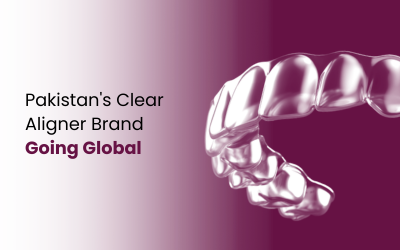
ClearPath Aligners Pakistan: The Future of Teeth Straightening Around the Globe
What does it actually mean when a brand from Pakistan starts shipping clear aligners to clinics in the UK, Australia, and North America? It means the gap between “made locally” and “trusted globally” has closed and for patients in Pakistan, that is genuinely good news.
Clear aligners in Pakistan are no longer a premium import or a last-resort alternative to braces. They are a mainstream, clinician-led teeth straightening treatment that is now made, planned, and delivered right here – and increasingly exported to dental practices across the globe. ClearPath aligners sit at the centre of that story, as one of the few dental aligner brands in Pakistan carrying multi-country regulatory approval, including FDA, DRAP, and several European certifications. For patients considering aligner treatment in Pakistan, that regulatory track record matters more than marketing language.
This article is for anyone who has been thinking about teeth straightening and wants a clear, honest picture of what clear aligner therapy actually involves – what works, what to expect, and why more patients globally are choosing this route over traditional braces.
Why This Is Not the Usual Aligner Article
Most content about invisible braces focuses on one of two things: listing features, or comparing costs. What tends to get skipped is the part that actually matters to a patient – the day-to-day experience of being in treatment, what determines whether results are good or average, and what questions you should be asking before you start.
The decision to straighten teeth without braces is a personal one, and it deserves more than a bullet list of benefits. So that is what this covers – context, honesty, and the details that make a real difference.
Read More: Pakistan’s First DRAP Approved Clear Aligner
What Are Clear Aligners and How Do They Actually Work?
Clear aligners are a series of custom-fitted, transparent plastic trays worn over the teeth. Each tray exerts gentle, controlled pressure on specific teeth, moving them incrementally toward the planned final position. When one tray has done its job – typically after one to two weeks – you move on to the next in the series.
The entire sequence of movement is mapped out digitally before treatment begins, using 3D scanning and planning software. This means your clinician – and you – can see the expected result before a single tray is worn. That predictability is one of the defining advantages of modern teeth straightening aligners over older orthodontic methods.
Dental aligners in Pakistan, particularly through ClearPath’s manufacturing process, are made from a tri-layer thermoplastic material – firmer on the outside for controlled force, softer on the inside for comfort against the gums. It is a detail that becomes obvious once you are wearing them, especially if you have previously tried a cheaper single-layer alternative.
Why Are Clear Aligners Gaining Ground So Quickly in Pakistan?
Three things have converged to drive the growth of aligner treatment in Pakistan: awareness, access, and affordability.
Awareness has come largely through social media and word of mouth. Invisible braces in Pakistan are no longer something people only hear about when visiting a dentist abroad – they are being discussed, reviewed, and recommended within local communities, often by patients who have completed treatment themselves. The question is no longer whether invisible braces in Pakistan are a viable option – it is which provider and system to trust.
Access has improved because more trained clinicians now offer aligner treatment as part of their standard practice – not as a niche add-on. And affordability has become a more realistic conversation because ClearPath, as a Pakistan-based manufacturer, has reduced the cost overhead that comes with importing aligners from international brands.
The result is that clear aligners in Pakistan are now genuinely within reach for a much wider patient population than even five years ago – and clinical quality has not been traded off to get there.
A Pakistan Brand on the Global Stage - What That Actually Means
ClearPath is registered and active as a global aligner brand in markets including the United States, United Kingdom, Australia, Canada, New Zealand, and Portugal – among others. For a manufacturer based in Lahore, that footprint is not incidental. It is the result of meeting the regulatory and quality standards that those markets require.
What this means in practice for patients is reassurance. When a brand operates as a global orthodontic solutions provider – not just locally – the manufacturing standards, material quality, and clinical oversight frameworks it applies are calibrated to international expectations. You are not getting a lower-tier product because you are receiving treatment in Pakistan.
For the broader orthodontic community, it signals something significant: that clear aligners worldwide are no longer the exclusive territory of a handful of Western brands. Pakistan has a seat at that table – and the regulatory approvals to prove it.
The smile transformation stories coming out of Pakistan through ClearPath’s network are consistent with what patients in those international markets experience. Same material, same digital workflow, same clinical oversight standards. For patients in Pakistan seeking a genuine smile transformation, the infrastructure to deliver it properly is right here.
Who Is a Good Candidate for Clear Aligner Treatment?
This is the question most aligner content avoids answering directly. The honest answer is: not everyone, and any provider who suggests otherwise is not being straight with you.
Clear aligner therapy works well for:
- Mild to moderate crowding — teeth overlapping or sitting out of line
- Spacing issues — gaps between teeth that affect appearance and sometimes function
- Certain bite problems — mild overbites, underbites, or crossbites within the treatable range
- Adults and older teenagers who can manage the compliance requirements of removable trays
For patients with severe skeletal discrepancies, significant jaw problems, or very complex bite issues, traditional braces or surgical intervention may be clinically necessary. A proper assessment will clarify this – which is why the first step in any aligner treatment in Pakistan should always be an in-person consultation with a qualified clinician, not an online questionnaire.
For those within the treatable range, though, the best invisible braces options available through ClearPath-trained clinicians offer results that are genuinely comparable to fixed braces – with a considerably easier treatment experience. If a smile makeover through aligners is what you are after, the starting point is honest clinical assessment, not assumptions.
What the Day-to-Day Reality of Wearing Aligners Actually Looks Like
People who choose to straighten their teeth without braces often do so because they have a specific lifestyle in mind during treatment – professional commitments, social events, a wedding, a new job. The experience of wearing clear aligners supports all of that in a way that metal braces simply cannot.
Here is what a typical day looks like on aligners:
- Morning: Remove trays, brush teeth, eat breakfast, brush again, reinsert trays.
- During the day: Trays stay in. Drink water freely. Avoid eating or drinking anything else with trays in.
- Meals: Remove trays, eat normally – no restrictions – brush and floss, reinsert.
- Evening: Same routine. Trays come out only for eating and oral hygiene.
- At night: Trays stay in during sleep – this is when a significant portion of your daily wear time accumulates.
The discipline required is real, but it is not complicated. Twenty to twenty-two hours of wear per day is the standard. Fall consistently below that and progress slows. Stick to it and the smile transformation results speak for themselves – which is why patients in Pakistan who complete ClearPath treatment properly tend to be among the most satisfied.
Affordable Aligners in Pakistan: What Shapes the Cost?
One of the most searched questions around dental aligners in Pakistan is cost – and it is a fair one. The answer varies, because treatment cost is driven by case complexity, the number of trays required, and the fees of the treating clinician rather than a fixed price list. Understanding what shapes cost helps patients compare options more honestly.
What ClearPath’s local manufacturing does is remove one of the largest cost variables: import pricing. International aligner brands that manufacture overseas and ship to Pakistan carry significant logistics and import overheads that get passed on to the patient. Affordable aligners in Pakistan, through a locally manufactured system with international quality standards, are not a compromise – they reflect a more efficient supply chain.
For a specific cost estimate for your aligner treatment in Pakistan, a consultation with a ClearPath-trained clinician will give you an accurate figure based on your individual case. Broad online estimates are rarely reliable because no two treatment plans are the same.
How Digital Planning Makes Modern Aligner Treatment More Predictable
The shift that has made modern teeth straightening treatment reliably effective is not the material the aligners are made from – it is the digital planning behind them. Intraoral 3D scanning, AI-assisted movement simulation, and precision manufacturing have collectively removed much of the guesswork that existed in orthodontics a generation ago.
ClearPath’s planning platform, CP Smart 2.0, allows clinicians to design the full sequence of tooth movement, adjust individual stages, and approve the final plan before any aligner is manufactured. The patient sees a projected simulation of their result before treatment starts. That level of transparency is now part of what patients expect from global orthodontic solutions – and it is what ClearPath delivers.
For patients, the practical value is this: fewer surprises mid-treatment, clearer expectations from the start, and a treatment plan that has been reviewed and approved by a qualified clinician rather than generated automatically without professional oversight.
The Mistakes That Slow Down Aligner Treatment - and How to Avoid Them
Clear aligner therapy delivers excellent results when patients follow the clinical guidelines. The cases that fall short almost always trace back to the same handful of avoidable mistakes.
- Inconsistent wear time. The single biggest factor. Even a few hours short per day, consistently, will delay your results.
- Eating with trays in. This warps the plastic and can stain it. Trays come out for all food and drink except water.
- Poor oral hygiene before reinserting. Bacteria trapped under the tray accelerate decay. Brush and floss every time before putting trays back in.
- Skipping check-up appointments. These are not optional. Monitoring ensures your teeth are tracking correctly – catching any drift early prevents the need for refinements later.
- Jumping ahead to the next tray too soon. Each tray needs to complete the movement it is designed for. Rushing this disrupts the sequence.
None of these are difficult to avoid. They just require the kind of consistent, low-effort habit that becomes automatic within the first week or two of clear aligner therapy.
What Every Patient Should Know Before Starting Aligner Treatment
The growth of aligner treatment in Pakistan has brought with it an increase in at-home and direct-to-consumer aligner kits that bypass clinical assessment entirely. This is worth addressing clearly.
Unsupervised aligner treatment – where no qualified clinician assesses the patient, reviews scans, or monitors progress – carries real clinical risks. Root resorption, gum recession, and bite changes are documented outcomes of orthodontic movement that is not properly planned or overseen. The lower price of DIY kits reflects the absence of professional care, not a more efficient process.
The standard for safe and effective aligner treatment in Pakistan – as in every other market where clear aligners worldwide are used responsibly – is clinician supervision from start to finish. ClearPath’s model is built on this: every case goes through a trained dental professional, every treatment plan is reviewed before manufacture begins, and every patient has a clinician responsible for monitoring their progress.
Before starting any aligner treatment in Pakistan, ask your provider: who assessed my scans, who designed this treatment plan, and who will monitor my progress? If those questions do not have clear answers, keep looking.
End Note
Pakistan has a teeth straightening aligners option that is clinically credible, globally approved, and locally accessible. That has not always been the case, and it is worth acknowledging how much has changed.
For patients considering dental aligners in Pakistan, the advice is simple: get a proper clinical assessment, ask the right questions about how your treatment will be planned and monitored, and choose a provider whose training and credentials you can verify. The technology and the clinical infrastructure exist to give you a genuine smile transformation – the deciding factor is the quality of the professional delivering it.
ClearPath’s network of trained clinicians across Pakistan is available to provide that assessment. Visit clearpathortho.com to find a provider near you and take the first step toward a smile transformation you can be confident in.
FAQs
1. What are clear aligners used for?
Clear aligners are used to correct mild to moderate orthodontic issues including crowded teeth, spacing gaps, and certain bite problems. They move teeth gradually using a series of custom-fitted transparent trays, each planned digitally in advance.
2. Can clear aligners straighten teeth without braces?
Yes – for suitable cases. The ability to straighten teeth without braces, using transparent trays that are virtually invisible in everyday life, is the primary reason so many adults choose aligner treatment. Suitability depends on the nature and severity of the orthodontic issue, which only a clinical assessment can determine.
3. How much do clear aligners cost in Pakistan?
The cost of dental aligners in Pakistan varies depending on case complexity, the number of trays required, and the treating clinician’s fees. ClearPath’s local manufacturing removes import overheads that inflate the cost of international brands, making affordable aligners in Pakistan a realistic option for a wider patient base. For an accurate figure, a consultation with a ClearPath-trained clinician is the right starting point.
4. Are ClearPath aligners effective for crowded teeth?
Yes, within the appropriate severity range. ClearPath aligners handle mild to moderate crowding well through digitally planned, incremental tooth movement. Severe crowding may require additional clinical steps – your clinician will identify this during the initial assessment.
5. Which is the best invisible braces option in Pakistan?
ClearPath is one of the few aligner systems manufactured in Pakistan with multi-country regulatory approval – including FDA and DRAP. For patients looking for the best invisible braces option that combines international quality standards with local accessibility and pricing, it is a well-supported choice.
6. How do aligners move teeth safely?
Aligners apply controlled, biomechanically calculated force to specific teeth at each stage of treatment. The movement per tray is minimal – fractions of a millimetre – which keeps the process within the safe biological limits of tooth movement. Clinical oversight throughout treatment ensures any deviations from the planned path are caught and corrected early.
7. Are clear aligners painful?
Most patients experience mild pressure when moving to a new tray – particularly in the first day or two. This is a normal and expected sensation, and it is considerably milder than the discomfort that typically follows a braces tightening appointment. It resolves quickly as the teeth adjust.
8. How long should aligners be worn each day?
The clinical standard is 20 to 22 hours per day. The remaining time accommodates eating, drinking anything other than water, and oral hygiene. Consistent daily wear within this range is the most important factor in keeping treatment on schedule.
9. What foods should be avoided with aligners?
None – because you remove the trays before eating. This is one of the most appreciated differences between aligner treatment and traditional braces, where hard, sticky, and chewy foods must be avoided throughout treatment. With aligners, you eat normally and replace the trays after brushing.
10. Can adults use clear aligners for smile correction?
Absolutely. Adults represent a large and growing proportion of clear aligner patients globally, and there is no upper age limit provided the teeth and supporting structures are healthy. Many adults seek smile makeover treatment for issues that were never addressed in adolescence – and clear aligner therapy makes that possible without any visible orthodontic hardware during the process.